The company has 250 engineers in 20 teams. A good share of their work goes into new products and features that can be capitalized, which makes the monthly report a real number on the balance sheet, not a formality. Auditors look at it. So does the board.
The challenge: a monthly report held together by spreadsheets
The report itself wasn’t complicated. Getting the inputs right was.
Finance needed to know how much engineering time went into capitalizable work each month. That information lived in three places: timesheets, tasks in Jira, and cost data. None of them lined up neatly. Timesheets were filled in late or in bulk at the end of the month. Tasks didn’t say how many hours went into them. And people took vacations or sick days that the timesheets didn’t always reflect.
So every month, finance and engineering managers sat down and reconciled it by hand. When something didn’t match, someone messaged an engineer to ask which project last Tuesday’s hours were for. Most engineers couldn’t remember exactly, and they had better things to do than reconstruct their week.
All of this added up to about 24 person-hours a month just to prepare and check the report, and a steady trickle of interruptions for engineers on top of it.
Why AndonPulse
The finance team had two firm requirements. The numbers had to be traceable back to real work, and they had to be explainable to an auditor without “the tool calculated it.” Engineering had one: no new timesheets.
AndonPulse fit both sides. It builds time allocation from the history of Jira tasks, so the source is the work itself, and the rules for what counts as capitalizable are written and visible in the platform. Adding BambooHR meant vacations and sick leave are taken into account automatically instead of being fixed by hand later.
The solution: rules from finance, data from the work
Setup took three to four weeks, a bit longer than usual, and on purpose. Beyond connecting Jira and BambooHR, the company configured its capitalization rules together with finance: which projects and types of work qualify, and how time in each workflow status is counted.
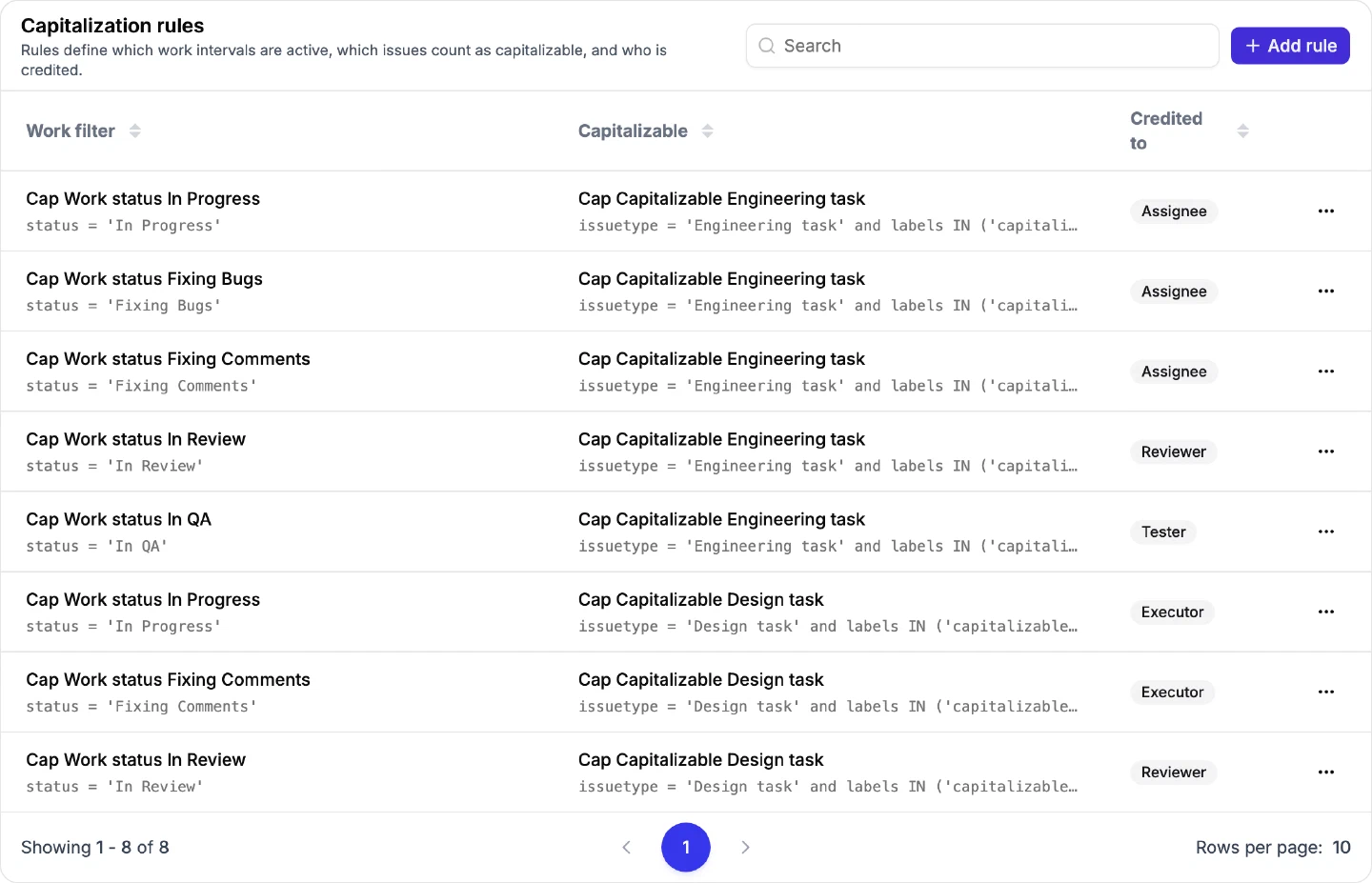
Before going live, the team ran a trial report and went through it line by line with the finance team. Where finance disagreed with how something was classified, the rule was adjusted, not the output. That way the next month’s report would get it right too.
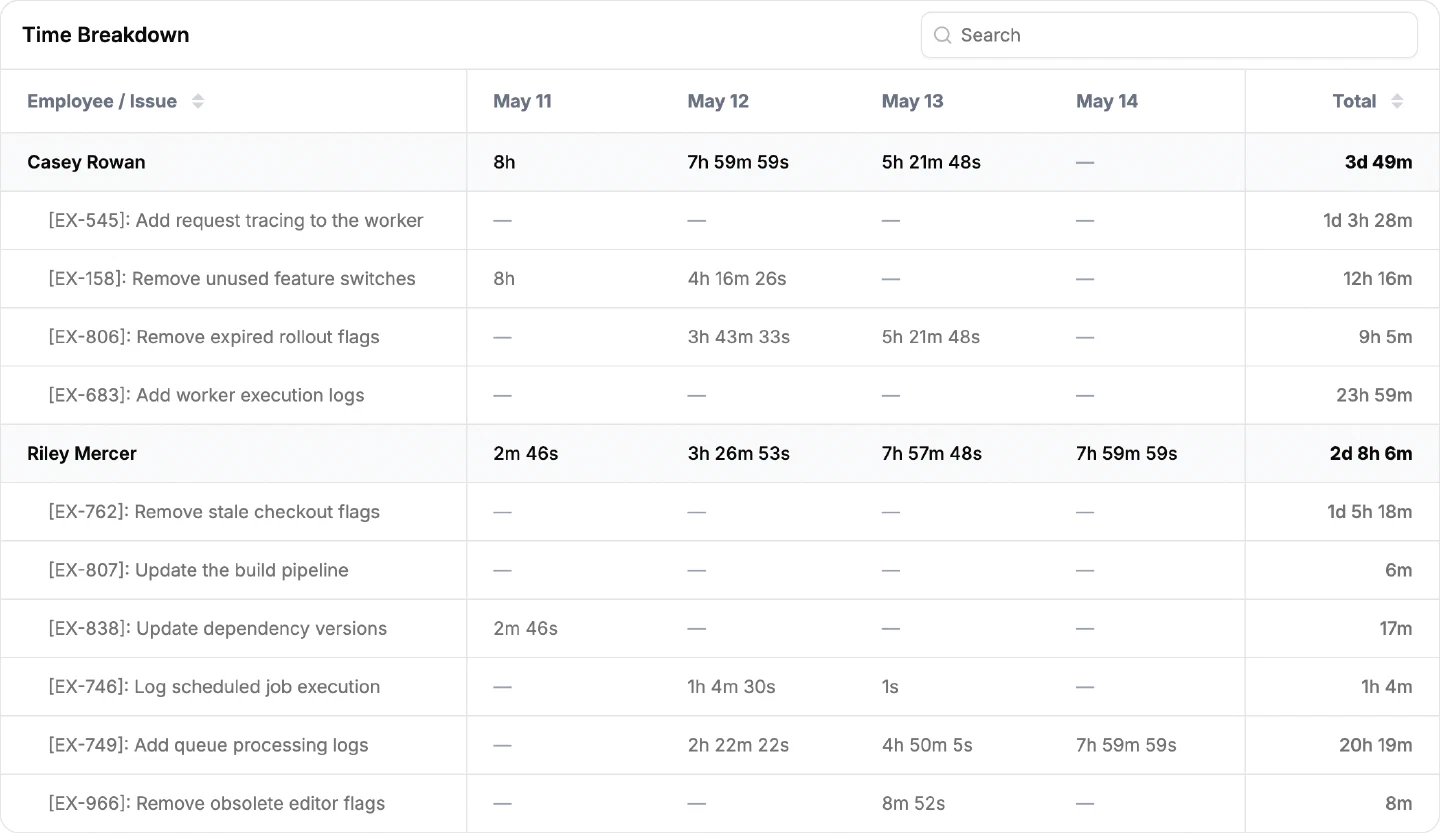
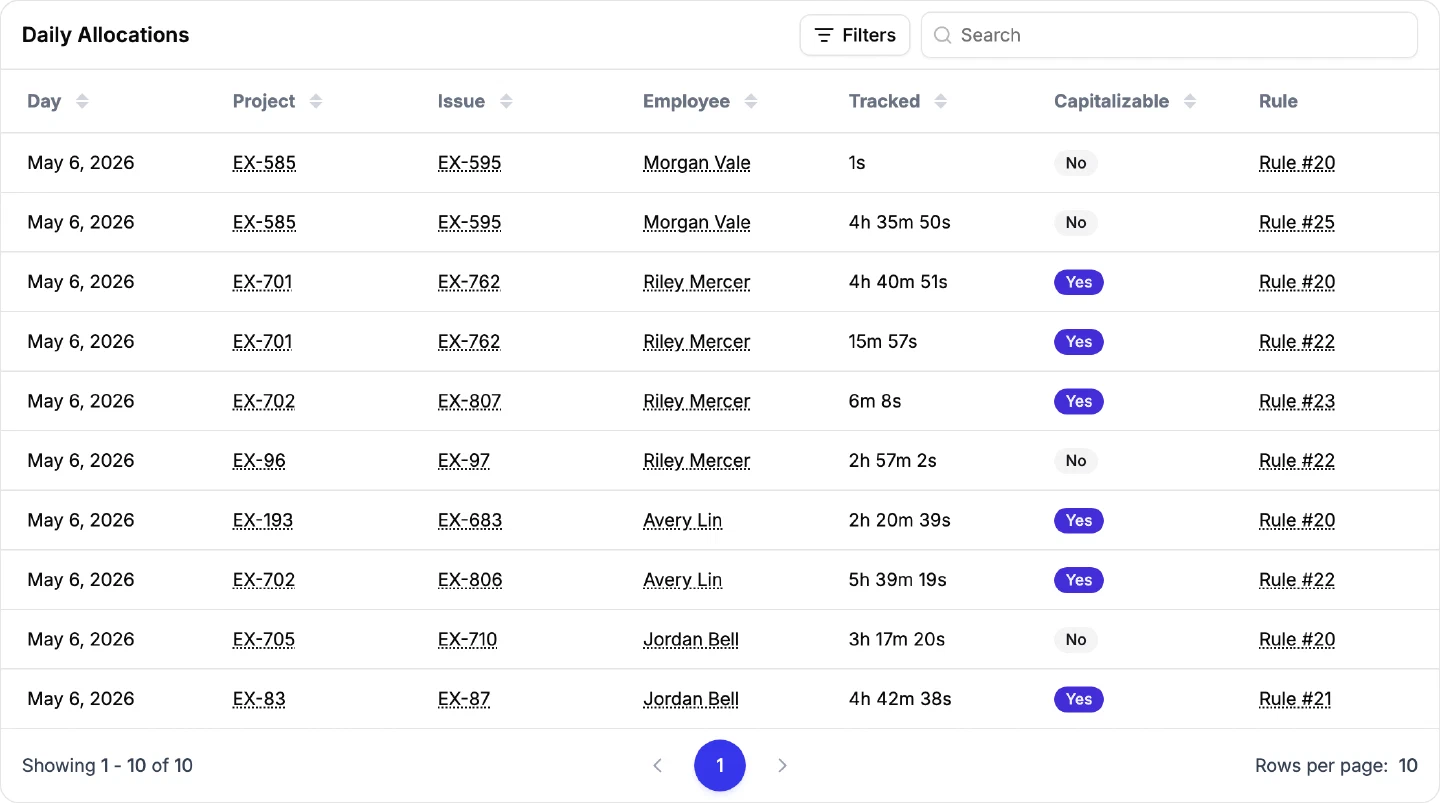
Now the monthly process is short. AndonPulse builds the report from task history and absence data. Finance reviews the calculations, checks anything that looks off, and approves the result. Engineers aren’t involved at all.
We used to spend the first days of every month chasing hours. Now we review numbers we can trace back to actual tasks, and when an auditor asks how we got there, we can show them.
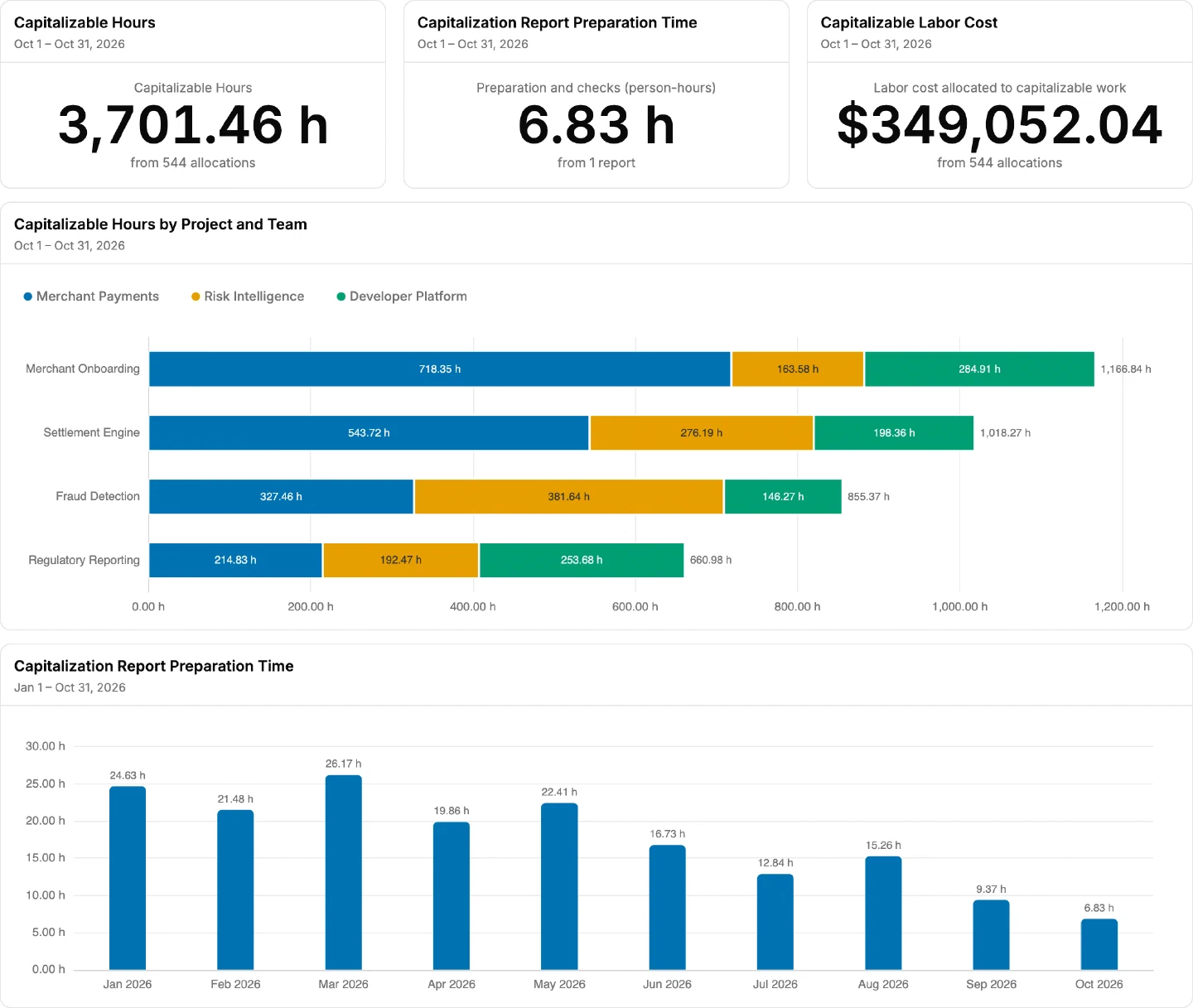
Results after three monthly cycles
Preparing and checking the report: 24 → 6 person-hours, −75%. Most of the remaining time is finance reviewing and approving, not collecting.
Engineer timesheets for this report: 0 hours. Allocation comes from task history, so nobody fills in hours separately for capitalization.
Absences handled automatically. BambooHR data removes vacation and sick days from the calculation without manual fixes.
Approved by finance. Every figure traces back to tasks and to the rules finance helped write.
| Metric | Before | After 3 monthly cycles |
|---|---|---|
| Person-hours to prepare and check the report | 24 | 6 |
| Separate engineer time-logging for the report | Regular, every month | 0 hours |
Time-to-value
Three to four weeks from kickoff to a trial report finance had checked, and three monthly cycles to the results above.
What’s next: the same data, a different question
With task data now accurate enough for finance to rely on, engineering leadership plans to use the same view to look at delivery itself: where work slows down across the 20 teams and how capitalizable projects are progressing against plan.